
- 10 Chic Houseplant Ideas to Style Your Home - June 18, 2026
- Cozy Balcony Vibes: 10 Hanging Plants to Try Now - June 18, 2026
- Top 10 Stunning Plants for Hanging Baskets - June 18, 2026
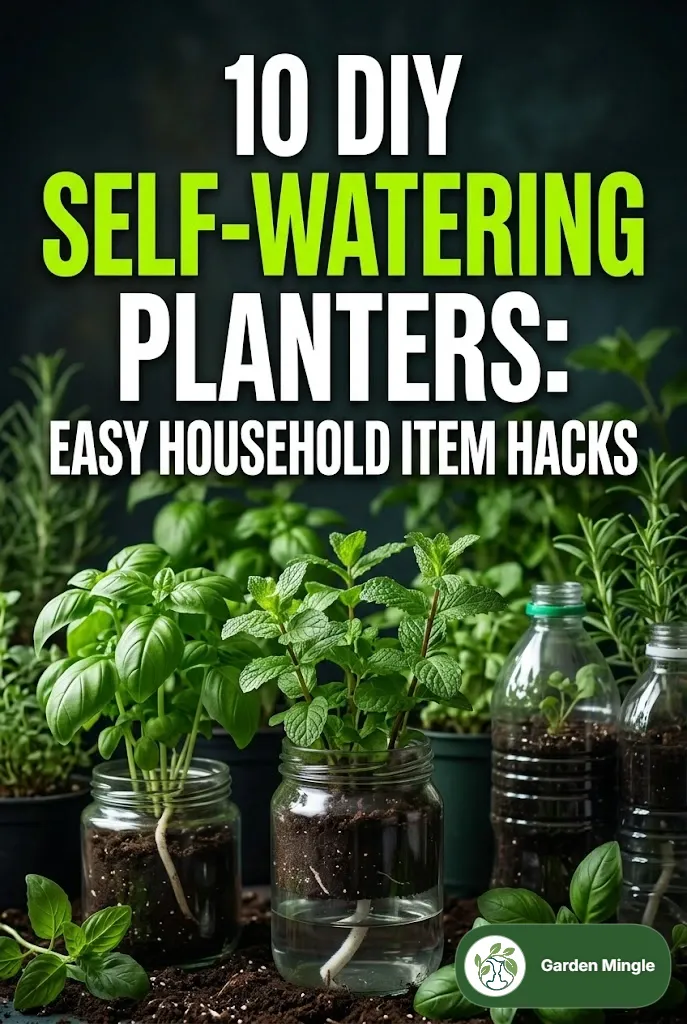
Share the post "10 DIY Self-Watering Planters: Easy Household Item Hacks"
Are you tired of constantly worrying about your plants drying out or overwatering them? Self-watering planters could be your perfect solution! These ingenious creations allow plants to hydrate themselves as needed, making gardening easier and more enjoyable. Plus, you don’t need to break the bank to get one; you can easily make your own using simple household items. Let’s dive into ten creative DIY self-watering planter hacks that will not only keep your plants happy but also add a touch of charm to your home.
Quick Answer
DIY self-watering planters can be made using everyday items like plastic bottles, mason jars, and more. These planters allow plants to access water as needed, ensuring optimal hydration without the worry of over or underwatering.
1. Plastic Bottle Planter
Transforming a plastic bottle into a self-watering planter is simple and effective. Here’s how to do it:
- Cut a plastic bottle in half.
- Take the bottom half and fill it with soil and your chosen plant.
- In the top half, add water. Invert it into the bottom half, allowing the soil to absorb moisture through the neck.
This method ensures that your plant receives just the right amount of water over time.
2. Mason Jar Self-Watering Planter
Mason jars offer a chic look while serving a practical purpose. Here’s how to create one:
- Fill a mason jar with water and place a small piece of cloth or cotton rope into it, allowing one end to sit in the water.
- Add soil and a small plant on top of the cloth. The cloth will wick moisture from the jar to the plant.
This stylish planter can be a great addition to your kitchen or living room décor.
3. Tupperware Planter
Old Tupperware can easily be repurposed into a self-watering planter:
- Drill or poke holes in the lid of a Tupperware container.
- Fill the container with soil and insert your plant.
- Pour water into the container and replace the lid; the holes will allow moisture to rise to the soil.
This option is particularly good for herbs, keeping them hydrated without fuss.
4. Wine Bottle Planter
Wine bottles can add elegance to your plant display. Here’s a quick guide:
- Fill a clean wine bottle with water and place it upside down into a pot of soil.
- The water will slowly seep out, providing a steady supply of moisture.
This method not only looks good but also helps conserve water.
5. Old Coffee Pot Planter
Repurpose your old coffee pot for a unique self-watering planter:
- Fill the coffee pot with soil and plant your greenery.
- Fill the water reservoir with water. The soil will absorb moisture through the filter area.
This hack is great for larger plants and adds a vintage touch to your space.
6. PVC Pipe Planters
Using PVC pipes can create a unique vertical garden:
- Cut a PVC pipe to your desired length and drill holes for planting.
- Cap one end of the pipe and fill it with soil and plants.
- Fill the pipe with water through the top; the plants will absorb water as needed.
This vertical approach saves space and brings a modern flair to gardening.
7. Egg Carton Planter
Your empty egg cartons can also work as self-watering planters:
- Cut the lid off the egg carton and fill the cups with soil.
- Place the egg carton in a shallow dish of water; the soil will absorb moisture from the bottom.
This is a great option for starting seedlings before transferring them to larger pots.
8. Buckets with Wicking System
Turn a regular bucket into a self-watering planter:
- Drill holes in a smaller bucket and place it inside a larger bucket.
- Fill the space between the two buckets with soil, making sure to leave the smaller bucket empty.
- Fill the larger bucket with water, allowing the soil to absorb moisture through the holes.
This method is excellent for larger plants or small trees.
9. Plastic Cup Planter
Plastic cups can make for great individual self-watering planters:
- Take a plastic cup and poke several holes in the bottom.
- Place a smaller cup inside it, ensuring the bottom is above the holes.
- Add soil to the inner cup and water it; the outer cup will hold excess water.
These are perfect for small herbs or flowers and can be easily moved around.
10. Glass Jar Planter with Wick
A glass jar can serve as a beautiful planter with a simple wicking system:
- Fill a glass jar with water and place a piece of fabric into it, ensuring one end is submerged.
- Add soil and your plant on top of the jar; the fabric will draw water to the plant.
This stylish method makes for a great centerpiece while keeping your plants hydrated.
Expert Tips
- Use quality potting soil to enhance moisture retention.
- Position your self-watering planters in indirect sunlight to avoid rapid evaporation.
- Regularly check water levels in your water reservoir for optimal plant health.
Common Questions (FAQ)
Can I use any type of container for self-watering planters?
Yes! As long as the container has a water reservoir and a way for the soil to absorb moisture, it can work.
How often should I refill the water in a self-watering planter?
It depends on the size of the planter and the type of plant, but typically every few days to a week is sufficient.
Are self-watering planters ideal for all types of plants?
Most plants can thrive in self-watering planters, but be cautious with those that prefer drier conditions.
Conclusion
Creating your own self-watering planters is not only a fun DIY project but also a fantastic way to ensure your plants thrive with minimal effort. With these ten easy hacks, you can repurpose household items into beautiful, functional planters that will keep your greenery happy and hydrated. Get started today, and watch your plants flourish!
Leave a Reply