
- Propagating Succulent Leaves in Water: The Definitive Guide - August 16, 2026
- Succulent Pot Size Guide: 8 Things You Need To Know - August 16, 2026
- How to Prune a Succulent? (Complete Guide) - August 16, 2026
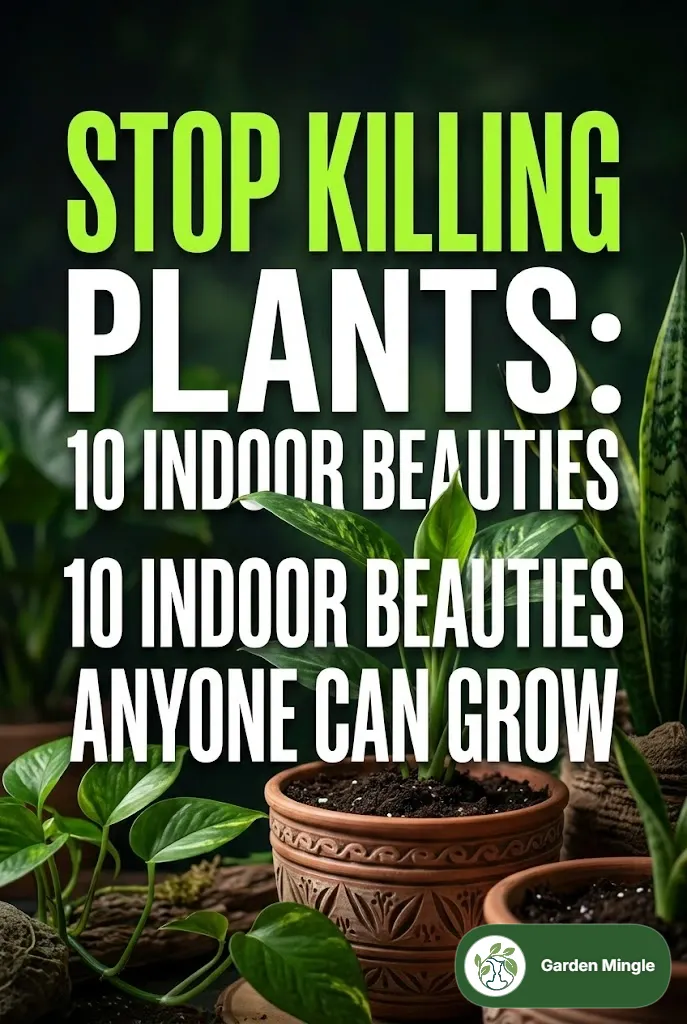
Are you tired of watching your indoor plants droop, turn yellow, or worse—wither away? You’re not alone! Many plant lovers struggle to keep their green friends alive, often feeling overwhelmed by conflicting advice and care routines. Fortunately, there are plenty of resilient indoor plants that are perfect for beginners and can thrive with minimal attention. Let’s explore ten indoor beauties that anyone can successfully grow, transforming your home into a lush oasis.
Quick Answer
To stop killing plants, choose resilient indoor plants like pothos, snake plants, and peace lilies. These varieties are low-maintenance, adaptable, and can thrive in various conditions, making them perfect for anyone looking to brighten their space with greenery.
1. Pothos (Epipremnum aureum)
Pothos is a favorite among plant enthusiasts for good reason. This trailing vine is incredibly forgiving, making it ideal for beginners.
Care Tips:
- Light: Thrives in low to bright indirect light.
- Water: Water when the top inch of soil is dry.
- Soil: Use well-draining potting soil.
With its heart-shaped leaves and vibrant variegation, pothos adds charm to any room. Plus, it’s known for its air-purifying qualities!
2. Snake Plant (Sansevieria trifasciata)
Also known as mother-in-law’s tongue, the snake plant is virtually indestructible. Its upright, sword-like leaves can bring a sculptural element to your decor.
Care Tips:
- Light: Adaptable; grows in low light to bright light.
- Water: Allow soil to dry completely between waterings.
- Soil: Prefers sandy potting mix.
3. Peace Lily (Spathiphyllum spp.)
If you want a plant that rewards you with stunning white blooms, the peace lily is an excellent choice. It’s not only beautiful but also boasts air-purifying properties.
Care Tips:
- Light: Prefers low to medium indirect light.
- Water: Keep the soil moist but not soggy.
- Soil: Use a well-draining potting mix.
4. ZZ Plant (Zamioculcas zamiifolia)
The ZZ plant is a tough cookie that can survive in low light and requires minimal water. Its glossy, dark green leaves make it a standout in any space.
Care Tips:
- Light: Tolerates low light but prefers indirect light.
- Water: Water every few weeks; let the soil dry out.
- Soil: Use a well-draining potting mix.
5. Spider Plant (Chlorophytum comosum)
Spider plants are not only easy to care for, but they also produce adorable “baby” plants that dangle from the mother plant, making it a delightful addition to your home.
Care Tips:
- Light: Thrives in bright, indirect light but can tolerate low light.
- Water: Allow the top inch of soil to dry out.
- Soil: Use a well-draining potting mix.
6. Rubber Plant (Ficus elastica)
For more dramatic foliage, consider the rubber plant. Its large, glossy leaves can become a stunning focal point in any room.
Care Tips:
- Light: Prefers bright, indirect light.
- Water: Water when the top inch of soil is dry.
- Soil: Use a well-draining potting mix.
7. Dracaena (Dracaena spp.)
Dracaenas come in various varieties, each with unique foliage patterns and colors. They can adapt to various conditions, making them versatile houseplants.
Care Tips:
- Light: Prefers indirect light but can tolerate low light.
- Water: Let the soil dry out between waterings.
- Soil: Use a well-draining potting mix.
8. Chinese Evergreen (Aglaonema)
Chinese evergreens are known for their stunning variegated leaves and are incredibly easy to care for. They can thrive in a range of lighting conditions.
Care Tips:
- Light: Prefers low to bright indirect light.
- Water: Allow the top inch of soil to dry out.
- Soil: Well-draining potting mix is best.
9. Philodendron (Philodendron spp.)
Philodendrons are incredibly easy to grow and come in a variety of shapes and sizes. Their lush foliage can add a tropical vibe to your home.
Care Tips:
- Light: Prefers bright, indirect light.
- Water: Water when the top inch of soil is dry.
- Soil: Use a well-draining potting mix.
10. Cast Iron Plant (Aspidistra elatior)
True to its name, the cast iron plant is exceptionally resilient. It can tolerate neglect, low light, and even extreme temperatures.
Care Tips:
- Light: Thrives in low light.
- Water: Water when the soil is dry.
- Soil: Use a well-draining potting mix.
Expert Tips for Thriving Indoor Plants
- Rotate your plants every month to ensure even growth on all sides.
- Dust leaves regularly to maximize photosynthesis.
- Consider using self-watering pots for low-maintenance care.
Common Questions
How often should I water my indoor plants?
Watering frequency depends on the plant species and environmental conditions, but a good rule of thumb is to water when the top inch of soil is dry.
Do indoor plants need direct sunlight?
Most indoor plants prefer indirect sunlight. Direct sunlight can scorch their leaves, while too little light can hinder growth.
What is the best soil for indoor plants?
A well-draining potting mix is ideal for most indoor plants. Look for mixes that include perlite or vermiculite for improved drainage.
Conclusion
Transitioning to indoor gardening doesn’t have to be daunting. By choosing these ten resilient plants, you can cultivate a vibrant indoor garden that thrives with minimal effort. Remember, each plant has its own personality and needs, so take the time to observe and care for them. Your green thumb journey starts now—embrace it and enjoy the beauty these plants bring to your home!
Leave a Reply