
- Propagating Succulent Leaves in Water: The Definitive Guide - August 16, 2026
- Succulent Pot Size Guide: 8 Things You Need To Know - August 16, 2026
- How to Prune a Succulent? (Complete Guide) - August 16, 2026
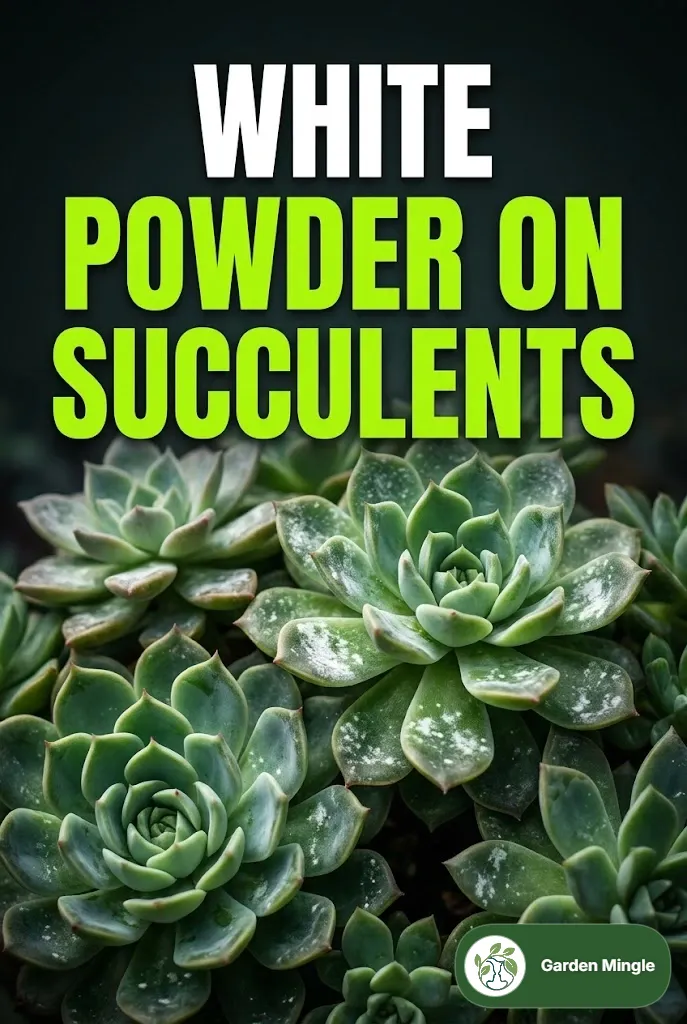
Seeing a white powder on your beloved succulents can be alarming. You may wonder if it’s a sign of a serious issue or if your plants are simply dusty. Understanding the root of this mysterious powder is crucial to keeping your succulents healthy and vibrant. In this article, we’ll explore the causes of white powder on succulents, how to identify the issue, and steps to remedy the situation. Whether it’s mealybugs, powdery mildew, or simply mineral buildup, your succulents can thrive with the right care.
Quick Answer
The white powder on succulents is often a sign of mealybugs, powdery mildew, or mineral deposits. Identifying the cause quickly is essential for effective treatment. Regular inspection and proper care can prevent these issues, ensuring your succulents remain healthy.
Common Causes of White Powder on Succulents
1. Mealybugs
Mealybugs are small, soft-bodied insects that appear as white, cottony clusters on your succulents. They feed on plant sap, which can lead to wilting and yellowing leaves.
- Identification: Look for clusters of white, fuzzy spots, especially in leaf axils and under leaves.
- Impact: If left untreated, mealybugs can weaken your plants significantly.
2. Powdery Mildew
This fungal disease manifests as a white, powdery coating on leaves and stems. It thrives in humid conditions, often affecting plants that are too crowded or not receiving enough airflow.
- Identification: Powdery mildew appears as a fine, white dusting that can spread rapidly.
- Impact: It can stunt growth and, if severe, may lead to leaf drop.
3. Mineral Deposits
Sometimes, the white powder is simply mineral buildup from hard water or fertilizer. This is often seen on the surface of soil or on leaves where water has dried.
- Identification: Look for a chalky residue that can usually be wiped off easily.
- Impact: This typically does not harm your succulent but can be unsightly.
Identifying the Problem
To effectively address the white powder issue, start by inspecting your succulents closely.
Steps to Identify the Cause
- Examine your plants in good light. Look for the characteristics of mealybugs or powdery mildew.
- Check for sticky residue on leaves, which could indicate mealybug presence.
- Observe the environment: Too much humidity can lead to powdery mildew, while dry, dusty conditions may result in mineral buildup.
Treating White Powder on Succulents
Treatment for Mealybugs
If you identify mealybugs as the culprit, here’s how to treat them:
- Remove by hand: Use a cotton swab dipped in rubbing alcohol to wipe away mealybugs.
- Insecticidal soap: Spray the entire plant with insecticidal soap, ensuring to cover all surfaces.
- Neem oil: This natural pesticide can also help eliminate mealybugs. Apply it every week until the infestation is gone.
Treatment for Powdery Mildew
For powdery mildew, try these methods:
- Improve air circulation: Space out your plants to prevent humidity build-up.
- Fungicide: Use a fungicide spray specifically designed for powdery mildew.
- Homemade remedy: Mix one tablespoon of baking soda with a gallon of water and spray on affected areas.
Cleaning Mineral Deposits
If the white powder is just mineral buildup, follow these simple steps:
- Wipe leaves: Use a damp cloth to gently wipe away the residue from the leaves.
- Change your watering method: Try using distilled or rainwater to minimize mineral deposits.
- Flush the soil: Occasionally flush the soil with water to remove excess minerals.
Preventing Future Issues
To keep your succulents healthy and powder-free, consider these proactive measures:
- Regular Inspection: Frequently check your plants for signs of pests or disease.
- Proper Watering: Water your succulents appropriately, allowing the soil to dry completely between waterings.
- Optimal Conditions: Ensure your succulents are in well-ventilated areas with adequate sunlight.
Expert Tips for Succulent Care
Here are some insider tips to keep your succulents thriving:
- Use a magnifying glass: This can help spot tiny pests like mealybugs before they become a larger issue.
- Rotate your plants: Regularly rotating your succulents can promote even growth and reduce the chance of fungal diseases.
- Choose the right soil: A well-draining soil mix can prevent excess moisture, reducing susceptibility to mildew.
Common Questions
What if the white powder keeps returning?
If the powder keeps coming back, reassess your care routine. Ensure proper spacing, ventilation, and watering practices are followed.
Can I use home remedies for mealybugs and powdery mildew?
Yes! Many home remedies, like neem oil and baking soda, can be effective against these issues. Just ensure to test first on a small area.
Is the white powder harmful to my succulents?
While mineral deposits are usually harmless, mealybugs and powdery mildew can seriously affect your plant’s health if not treated promptly.
Conclusion
Discovering white powder on your succulents doesn’t have to spell disaster. By identifying the cause and taking appropriate action, you can restore your plants to their former glory. Regular care, inspection, and a little knowledge can go a long way in ensuring your succulents thrive. Remember, every plant is a journey, and learning how to care for them is part of the joy!
Leave a Reply